
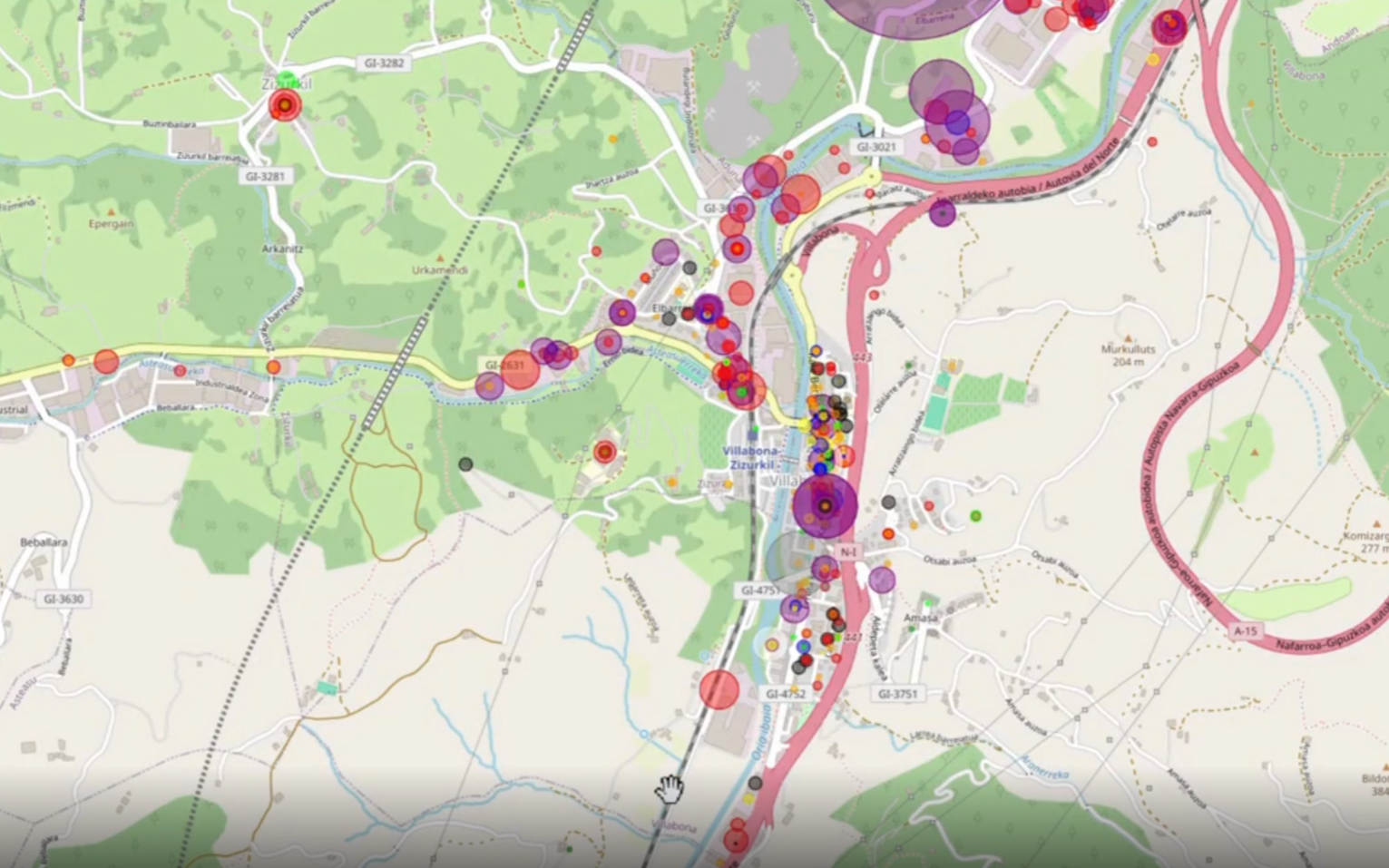
FREIGHT TRANSPORTATION DEMAND EXPLORATION
Freight transport is essential to economic activity and everyday life.
Over recent decades, technological development has enabled increasingly globalized supply chains, while the rise of the internet and e-commerce has significantly increased the volume and visibility of goods movements. Despite this growing importance, freight transport often remains insufficiently integrated into urban and regional transport planning.
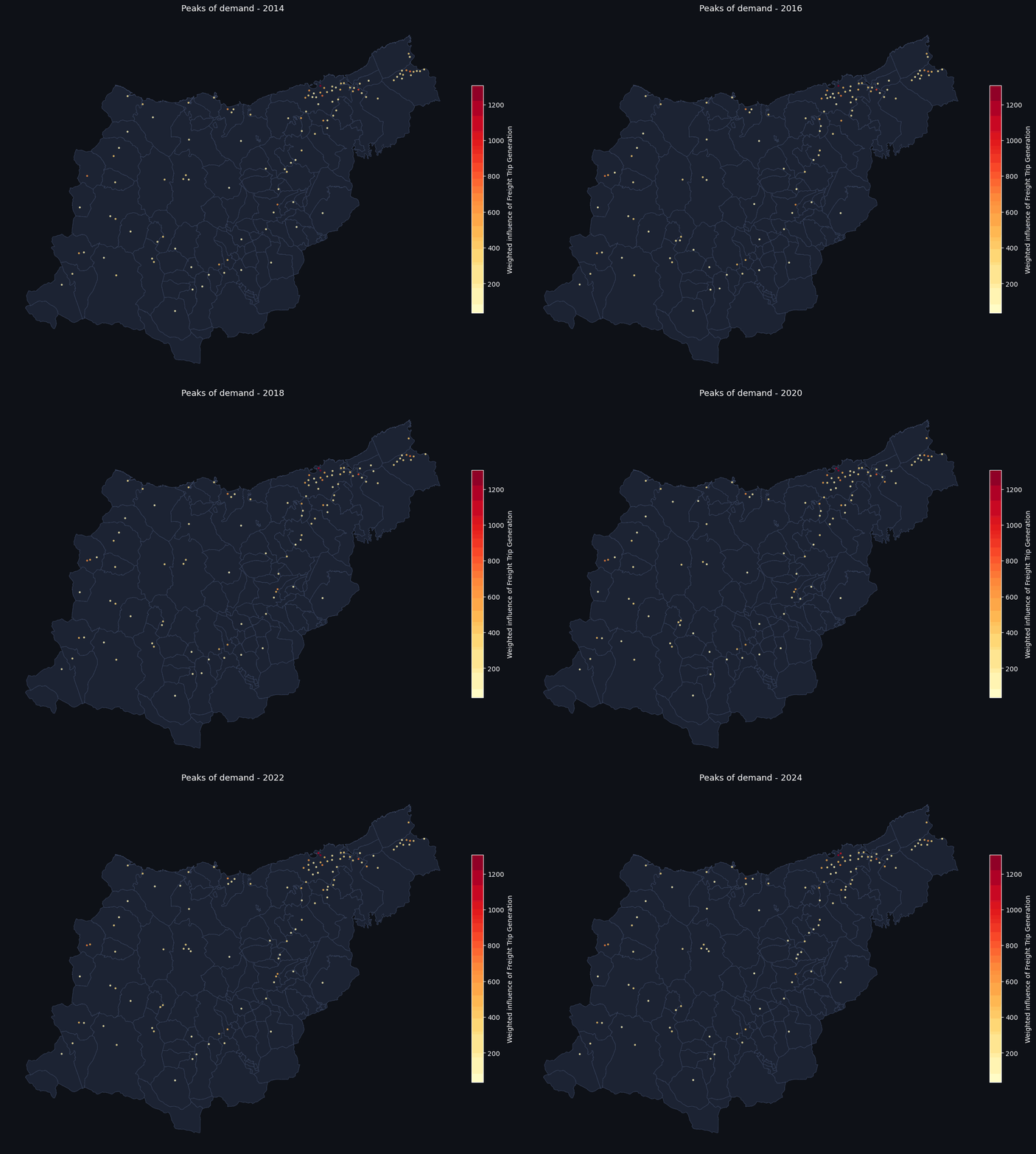
This research examines the demand, evolution, and spatial distribution of freight transport in Gipuzkoa. Given the fragmented governance that characterizes the freight sector and the persistent lack of comprehensive data, the project seeks to develop a simulation framework capable of assessing the impacts of different freight-related interventions and policies. The model aims to evaluate environmental, social, and economic outcomes while accounting for interactions with broader territorial dynamics.
Beyond modelling and analysis, the research adopts a collaborative governance approach, engaging stakeholders in the definition of performance indicators and evaluation criteria. It also explores how freight transport can contribute to addressing wider regional challenges, including accessibility gaps and the decline of rural economies.
1. Understand
Map and analyze freight transport demand, flows, and territorial dynamics in Gipuzkoa.
2. Model
Assess the impacts of alternative policies and intervention scenarios.
3. Transform
Co-create solutions with stakeholders to improve sustainability, accessibility, and regional resilience.
As part of this work, a preliminary pilot study developed at the MIT Media Lab investigated how freight transport networks could support the distribution of locally produced organic food. The study explored the potential of logistics systems to expand producers' market reach while improving accessibility to local and sustainable food products for consumers across the region.
By integrating freight transport into a broader regional systems perspective, this project aims to provide decision-makers with the tools and knowledge needed to design more sustainable, resilient, and inclusive mobility and logistics policies.